Free Shipping on Orders $100+
Build Your Truck in 3D with RealTruck Builder

Bull Bars & Push Bar Bumpers
Only display items that ship the quickest

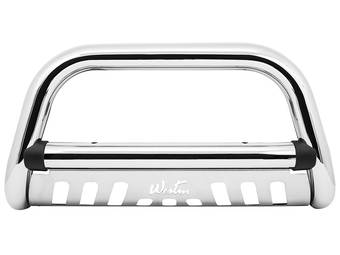
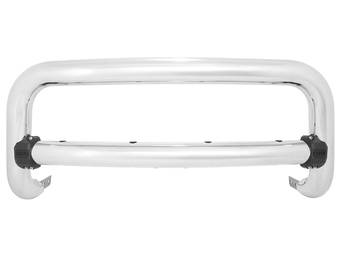
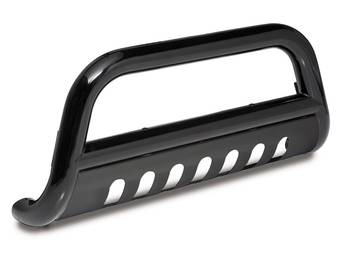
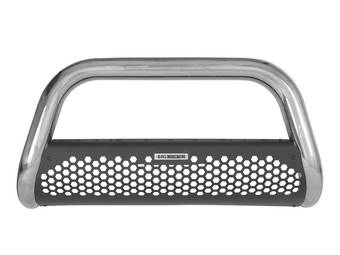
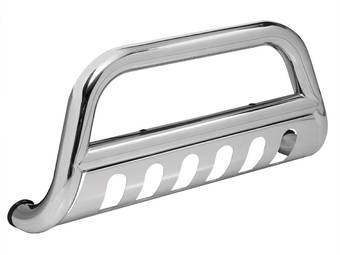
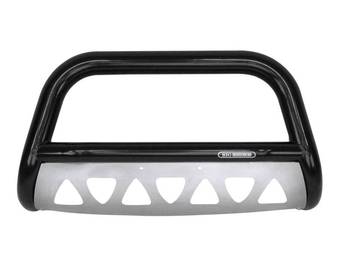

No-Drill, Protective Bull Bars & Push Bars
A truck bull bar installs in an afternoon, bolts to factory mounting points without drilling, and turns a bare bumper into a front-end that’s up for anything. Most bull bars in this catalog use vehicle-specific brackets and hardware included in the box—no fabrication, no body shop, no permanent modifications to your truck. For these reasons, bull bars have become the most common front-end upgrade on half-ton trucks.
Bull bars handle low-speed and glancing impacts and abrasions—parking structure pillars, brush and branches on a trail, gravel and road debris on the job site, or minor bumper contact while parking. Many models add an integrated skid plate for off-road undercarriage protection. While providing some front-end protection, a bull bar isn’t a crash structure. It is a bolt-on hoop engineered for aesthetics, light mounting, and minor impact protection—not an engineered replacement for the vehicle's front crash system. If structural front-end protection is the goal, a replacement bumper is the honest answer.
Sensor clearance is the most common concern in this category, and it is worth addressing before you browse. If your truck has factory front parking assist—common on 2018-and-newer half-tons—enter your vehicle in the Shop by Vehicle selector first. The product description on most sensor-compatible bull bars and front-end guards will say so explicitly. If a product doesn't list specific compatibility claims, contact the experts at RealTruck before ordering. This is the most common reason a bull bar comes back. For more on what separates a bull bar from a push bar, our Bull Bars vs. Grille Guards guide covers it, and the best truck bull bars buying guide walks through the decision by use case.
Bull Bar Materials
Material choice comes down to climate and use, not price alone.
Stainless Steel
This material resists rust and oxidation because of its chromium content, which makes it the pick for coastal air and road-salt states. Most stainless bull bars come mirror-polished, which suits drivers who want a clean, finished look that holds up through winters without pitting or clouding. The finish requires more maintenance than powder coat to keep looking sharp, but the underlying metal will not corrode.
Steel
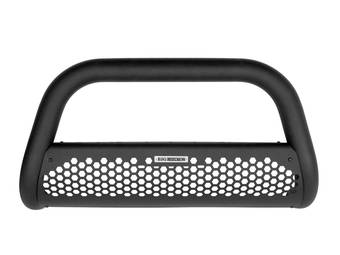
Carbon steel gives the most impact resistance of the three and is the classic bull bar material, available in chrome plating or textured black powder coat. Chrome has given way to black as the dominant finish in this category, and for good reason— textured powder coat withstands road salt and weather better over years of use, and the weld seams and mounting hardware—where corrosion actually starts—are sealed rather than plated. Steel is the heaviest option, which matters on light-duty platforms. If a steel bar causes visible front-end sag on your truck, a leveling kit is the fix. The Go Rhino® RC4 LR is one of the standouts in the steel bull bar category—it retains factory front parking sensor function and features a unique hexagonal skid plate pattern that allows airflow across the radiator, intercooler, AC condenser, and fluid coolers.
Aluminum
Automotive-grade aluminum resists corrosion naturally and weighs noticeably less than comparable steel. That matters on light-duty trucks and for anyone watching front-end weight. Aluminum handles the everyday contact most buyers are actually protecting against—parking structures, brush, road debris—without the weight penalty of similar steel offerings. While not the pick for heavy off-road impact, aluminum bull bars are ideal for the daily driver who wants protection without adding front-end weight.

Sensor Clearance Close-Up
Guard on. Sensors clear.

Finish Detail in Bad Weather
Ready for salt season.

The Bar as a Platform
One bar. Lights, skid plate, and armor.
Types of Bull Bars
Bull bars come in all shapes and sizes. Here are a few of the most common:
Single Tube Bull Bars
Clean, minimalist style with a simple hoop design—one tube across the front, round or square, in steel or aluminum. This is the right choice for the daily driver who wants front-end presence and protection against parking contact without adding visual mass to the truck. Light, straightforward, and the easiest to install.
Double Tube Bull Bars
Double-tube designs add a second hoop for more rigidity and a bolder appearance. The extra tube adds coverage and a more aggressive stance, and it is the middle ground for a buyer who wants more than a single hoop but is not running dense brush or trail terrain.
Triple Tube Bull Bars
Triple-tube is heavy-duty. It’s the construction you buy when you are actually in brush—thick vegetation, branches, or low-obstacle terrain where the bar is going to make contact. Three tubes add meaningful strength and rigidity at the expense of weight and price—an upgrade you don’t need if the parking lot is the only threat. Know what you are protecting against before you move up a tube count.
Illuminated Bull Bars
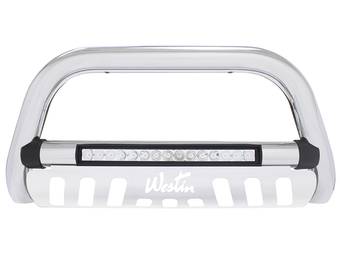
Illuminated bull bars integrate an LED light bar directly into the hoop, combining front-end protection with driving light output in a single piece of hardware. The alternative is a plain bar with pre-drilled light tabs and a separately purchased light bar from our off-road lights catalog. The integrated option is cleaner and installs faster. The separate approach lets you choose your own light bar output, beam pattern, and length, and upgrade it later without replacing the bar. Both paths are as much a lighting purchase as a bull bar purchase.
Push Bars
Push bar bumpers are a different product for a different buyer. Push bars are overbuilt to push another vehicle or a heavy object — which is why emergency response, municipal, fleet, and security operators run them rather than truck owners looking for front-end style. Push bars offer more coverage and zero styling consideration. If you are not pushing vehicles, you want a bull bar. See the full comparison at our Bull Bars vs. Push Bars guide.
Why Choose RealTruck for Bull Bars?
RealTruck carries the full front-end catalog—bull bars, grille guards, and full replacement bumpers—alongside the RealSource™ content that compares them. If you're on RealTruck looking for a front-end guard but aren’t sure which style is right for you, compare, research, and select products without ever leaving this site.
Two brands in this catalog are owned by RealTruck. Go Rhino®, N-FAB®, and Lund are RealTruck brands, and both have bull bars here alongside third-party options including Westin, Black Horse, Steelcraft, and Armordillo. When you order a Go Rhino or Lund bull bar from RealTruck, you’re ordering directly from the manufacturer. Warranty support and fitment questions go directly to RealTruck, rather than through a separate retailer-to-manufacturer chain. Other benefits of shopping RealTruck’s bull bars include:
No-drill installs confirmed by vehicle, with hardware included—bolt to factory mounting points in an afternoon
Sensor-retaining designs documented at the product level, with fitment backed by Guaranteed Fit
Stainless for salt states, steel for maximum impact resistance, aluminum for weight-sensitive builds—all three represented with real use cases, not just specs
Integrated LED options and light-tab-equipped bars link directly to the off-road lights catalog for a complete lighting build
Free shipping on all orders, including freight-class steel bars
FAQs About Our Truck Bull Bars
Q: Are Bull Bars Legal in the US?
A: Bull bars are broadly legal in the United States, and the rules that exist operate at the state and local level rather than federally. They typically cover things like not obscuring required lighting or license plates and not extending beyond vehicle width. If you're unsure, check your state's vehicle equipment rules, and note that requirements can differ for commercial and fleet vehicles.
Q: Will a Bull Bar Block My Truck's Front Parking Sensors?
A: It depends on the bar and the truck, and the difference matters. Some bull bars in this catalog are engineered to retain factory front parking sensor function, and the product description says so where that applies. Others sit in front of the sensor housings and will produce faults or false alerts. Enter your vehicle using the Shop by Vehicle selector before you browse, then read the product description for a sensor note on any bar you are considering. If the description is silent on sensors and your truck has front parking assist, contact the RealTruck fitment team before ordering. Sensor interference is the most common reason a bull bar comes back.
Q: What Does a Bull Bar Actually Protect Against, and What Does It Not?
A: A bull bar protects against low-speed and glancing contact—parking structure pillars, brush and branches on a trail or two-track, gravel and road debris, and minor bumper contact in parking lots. Many models also add an integrated skid plate for undercarriage protection off-road. A bull bar is not a crash structure—it is a bolt-on hoop mounted to the bumper or frame rails, not an engineered replacement for the vehicle's front crash system. If structural protection is the priority, a full replacement bumper is the right product.
Q: Bull Bar or Grille Guard—Which One Do I Want?
A: A bull bar is a smaller-footprint hoop that covers the bumper area and generally stops short of the grille. A grille guard wraps around the front and typically covers the grille and headlights, giving more coverage and more visual presence. Take the bull bar if you want serious style and protection from parking contact and brush without a large structure across the face of the truck. Take the grille guard if you want maximum coverage—particularly if brush, livestock, or wildlife are a real part of your driving. See our Grille Guards vs. Bull Bars guide and our grille guard selection.
Q: What Is the Difference Between a Bull Bar and a Push Bar or Push Bumper?
A: A bull bar is built for protection and aesthetics, with round or square tubing in stainless, chrome, or black powder coat. A push bumper is overbuilt to push another vehicle or heavy object, which is why emergency, municipal, and fleet operators run them. Push bars give more coverage and little styling consideration, and they are generally offered only in steel with a black finish. If you are not pushing vehicles, you want a bull bar.
Q: Stainless, Steel, or Aluminum—Which Material Should I Choose?
A: Choose by climate and use. Stainless resists rust and oxidation through its chromium content, making it the right pick for coastal air and road-salt states—it usually comes mirror-polished. Steel gives maximum impact resistance in chrome plating or powder coat, and it is the heaviest of the three. Aluminum resists corrosion naturally and weighs noticeably less, which matters on light-duty platforms and for anyone watching front-end weight, but it offers less impact resistance than comparable steel. All three handle the everyday contact most buyers are actually protecting against.
Q: Should I Upgrade My Suspension After Installing a Bull Bar?
A: It depends on the bar's weight and your truck's class. Most heavy-duty pickups handle a steel bull bar without a noticeable change in ride height. On a light-duty half-ton, a heavier steel bar can cause a slight front drop. If you see sag after install, a leveling kit is the standard fix—it restores ride height and rake without a full suspension overhaul.
Q: Can I Install a Bull Bar Myself?
A: Most vehicle-specific bull bars are designed for at-home installation with basic hand tools, bolting to factory mounting points on the bumper or frame rails. Many in the catalog offer no-drill installation. Plan on an afternoon and a second set of hands—these bars can be heavy and awkward to hold in position while you start the hardware. If you're unsure about your truck's front-end layout, read the installation instructions for your specific bar before ordering.
Q: What Does Guaranteed Fit Cover on a Bull Bar, and How Do Returns Work on Something This Heavy?
A: Bars showing the Guaranteed Fit badge have been verified against the vehicle you entered using the Shop by Vehicle selector. If a Guaranteed Fit product does not fit as specified, RealTruck covers the return within the stated return window—and that matters more here than in most categories, because a bull bar is among the more expensive and awkward things in the catalog to crate and ship back. To get the benefit, enter your vehicle before adding anything to the cart, and check the product description for trim-level and sensor-accommodation notes.