Free Shipping on Orders $100+

Heavy-Duty Rock Sliders for Trucks & Jeeps
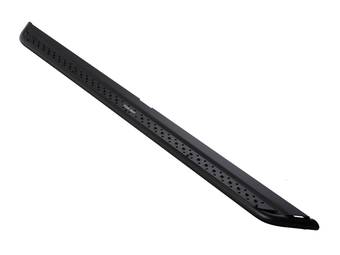


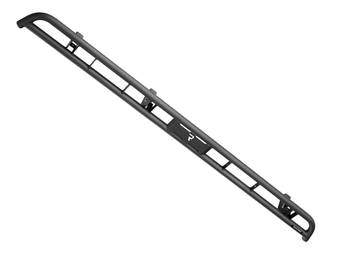


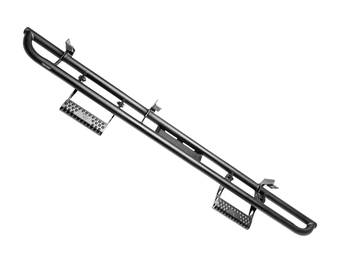
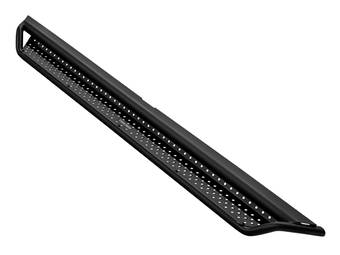












Heavy-Duty Rock Sliders for Trucks & Jeeps
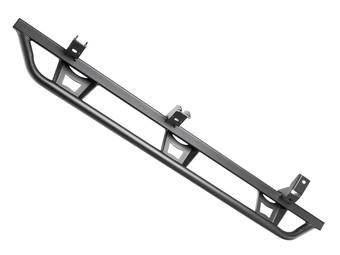
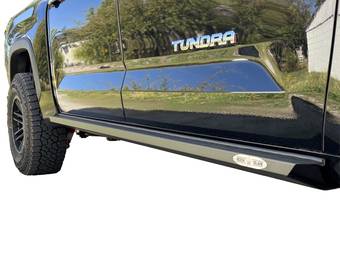
A rock slider is a frame-mounted steel or aluminum tube that runs along your rocker panel—the lowest point on the side of your truck or Jeep’s body, and the exact spot that contacts a rock when a tire drops off a ledge. Rocker panels are structural, difficult to repair, and expensive to replace. A slider takes the hit instead, which is why off-road builders typically add them as the first line of armor to a new rig.
This catalog includes rock sliders for Tacoma, 4Runner, Jeep Wrangler JL, Jeep® Gladiator, Ford Bronco, and full-size trucks. Every slider in this catalog is bolt-on—it mounts to the frame or vehicle-specific brackets with standard hand tools, installs in an afternoon without welding or cutting, and comes off cleanly if you sell the vehicle. If you want convenience and access on a daily driver rather than heavy trail armor, running boards and nerf bars are the right choices.
How to Choose Rock Sliders
Fitment
Rock sliders come in cab-length and wheel-to-wheel configurations. Cab-length sliders run the length of the cab and cover the front and rear doors. Wheel-to-wheel sliders extend from just behind the front tire to the rear wheel well, covering both the cab and the forward section of the bed. Most Jeep sliders run wheel-to-wheel by default. Truck sliders come in both—cab-length for rocker protection only, wheel-to-wheel for full-side coverage on a build that needs it.
Select your vehicle in the Shop by Vehicle selector or use the Step Finder before you browse. Fitment in this category is frame-specific, not just year-make-model, and a slider that is close but not exact will not mount flush or protect properly.
Mounting
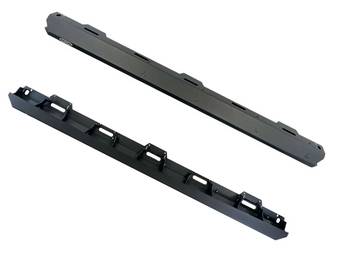
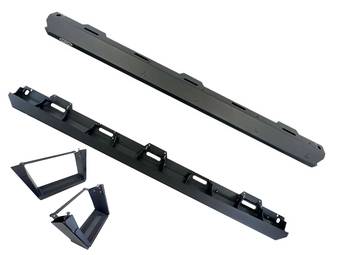
Every rock slider and rock rail in this catalog is bolt-on. That means it mounts to the frame or vehicle-specific brackets through existing holes on most applications, installs with standard hand tools, and does not require a welder or a fabrication shop. For most owners—including serious trail users—that’s the sweet spot. A quality bolt-on slider rated to handle vehicle weight takes the impacts most trail use delivers, comes off if you sell the truck, and doesn't require a shop visit.
A welded slider ties directly into the frame and is a heavy-duty option for a dedicated rock-crawling rig that sees sustained, extreme impacts. However, it is permanent, requires a welder, and cannot simply be shipped to your driveway for quick installation. RealTruck sells bolt-on sliders because they deliver outstanding protection while remaining easy for owners to install at home. If you are building a dedicated hardcore trail rig, a welded slider from a specialty fabricator is worth considering. For almost everyone else, bolt-on is the most practical and capable choice.
Load Rating and Tube Sizing
Tube diameter and wall thickness determine whether a slider is rocker armor or a reinforced step bar. Heavier-wall tubing built to frame-mounting specifications is what you buy when you need the slider to support vehicle weight—on a trail, when a tire drops off a ledge, or when you need to jack the truck. Lighter tube construction suits a daily driver that sees occasional dirt roads but not serious rock contact.
Where a product is rated to support vehicle weight, the product page says so. Check that spec on any slider you are considering using as a jacking point. Do not assume a slider is rated for vehicle weight based on appearance alone—if the product page does not state it, contact the RealTruck fitment team before you use it that way.
Design
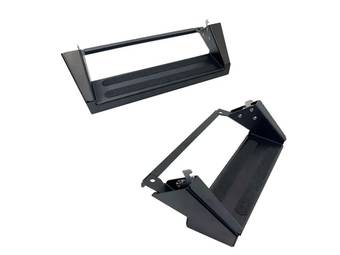
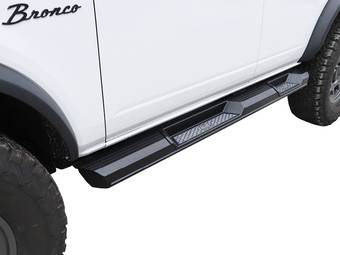
Rock sliders and rock rails come in two broad configurations—bare tube and step-capable. A bare tube slider sits tucked under the rocker, takes up minimal clearance, and is the top choice when maximum protection is the primary goal. A slider with a welded step plate or bolt-on step system gives you a usable surface to step on—for instance, the N-FAB® RKR accepts optional bolt-on steps while keeping a tight profile.
Kick-outs are the design detail that separates a trail slider from a step bar. A kicked-out end flares outward at the rear, which pushes a slipping tire back onto the slider rather than letting it slide past into the door. If your truck sees real ledge work, kick-outs are worth having. If you are on fire roads and forest tracks, they add width without much functionality.
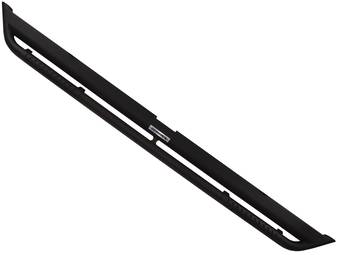
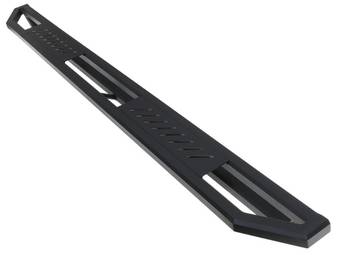
Rock slider steps—sliders with integrated or bolt-on step surfaces—are a great hybrid solution for drivers who want both rocker protection and convenient cab access. Keep in mind there is a trade-off—a slider step sits higher and narrower than a dedicated running board and is built firmer underfoot, but it handles major trail impacts that would destroy a standard running board.
If cab access is your main priority, running boards serve that need best. If trail protection comes first and you still want a step, a slider step is the ideal call.
Material
Steel is the default for rock sliders because it bends under impact rather than cracking, and you can often straighten a bent slider and reuse it. It is heavier than aluminum and depends on its finish for corrosion protection. Aluminum saves significant weight and does not rust, but it offers less impact resistance—it is the right pick for a weight-conscious build or a vehicle that sees salt and moisture more than hard rock contact. Both materials are in this catalog.
Finish
Most rock sliders ship in textured black powder coating. In the field, powder coat will scratch through to bare metal where the slider contacts rock—that is the product working as intended. Some sliders are available in raw or uncoated steel specifically so owners can touch up the contact points themselves with a rattle can. If finish longevity matters on a daily driver, look for a two-stage or textured powder coat. If you will be dragging it across rock regularly, raw or touch-up-ready finishes are worth considering.

The Contact Patch
The scratches are the point.

Kick-Out, Explained
The flare is what pushes your tire back onto the slider instead of into your door.

Bolt-On, No Welder
Hand tools, an afternoon, no welding.
Why Choose RealTruck for Rock Sliders?
Eighteen brands in one fitment-verified catalog. Go Rhino®, N-FAB, Rugged Ridge®, Rampage®, Havoc Offroad®, Lund®, Westin®, Fab Fours®, Rock Slide Engineering®, LoD Offroad, DV8 Offroad®, Body Armor 4x4, Attica 4x4, ICON®, BODYGUARD®, Steelcraft®, APS, and Smittybilt® are all here.
Go Rhino, N-FAB, Havoc, Rugged Ridge, Rampage, and Lund are RealTruck brands, which means the manufacturer and the retailer are the same company on a large share of this catalog. Warranty claims and fitment questions go directly to the manufacturer. The twelve third-party brands are here because no single manufacturer covers every vehicle, build style, and price point, and a page that only sells its own products is a storefront, not a comparison.
Every slider in the catalog is bolt-on, with fitment confirmed through the vehicle selector and backed by Guaranteed Fit. If a Guaranteed Fit slider does not fit as specified, RealTruck covers the return—giving you peace of mind on products that are heavy and costly to ship. Free shipping applies to orders over $100 to the lower 48, including freight items. Other benefits to shopping for sliders on RealTruck include:
Eighteen brands compared on one fitment-verified page, from tucked trail rails to step-capable sliders
RealTruck-owned brands including Go Rhino, N-FAB, Havoc, and Rugged Ridge—direct warranty support, no third party
Bolt-on across the catalog—hand tools, no welding, installs in an afternoon
Vehicle-specific pages for Tacoma, 4Runner, Wrangler JL, Gladiator, and Bronco, with 12–29 confirmed products each
Guaranteed Fit coverage on eligible sliders ordered for a specified vehicle
FAQs About Our Rock Sliders and Rock Rails
Q: What Is the Point of Rock Sliders?
A: Rocker panels are the lowest wide point on the side of a truck or Jeep, structural to the body, and expensive to repair. On a trail, a rock ledge, or a drop-off, that is exactly where contact happens. A rock slider runs along the rocker and takes that hit instead of the sheet metal. The slider gets scratched. The body stays intact. That is the whole point, and it is why most experienced off-road builders add sliders before almost any other armor.
Q: How Do Rock Sliders Differ From Running Boards?
A: A rock slider is frame-mounted armor—a running board is a step. Rock sliders use heavy-wall steel or aluminum tube construction, mount to the frame or body with structural hardware, and are built to take rock contact and support vehicle weight where rated. Running boards are designed primarily for easy cab entry and exit, featuring wider step surfaces and lighter mounting brackets. Many sliders include a step surface, but a slider step sits higher and narrower than a running board. If access is your main focus, running boards are the right product. If protection comes first, sliders are the answer.
Q: What Are the Best Rock Slider Brands?
A: It depends on how hard the vehicle gets used. For a tucked, low-profile design on a trail rig, N-FAB and Go Rhino. For a step-capable slider on a daily driver that sees occasional dirt, Havoc Offroad and Westin. For a dedicated trail build where the slider will take serious hits, Rock Slide Engineering, Fab Fours, and Body Armor 4x4 build heavier. All of them are in this catalog with fitment confirmed for your vehicle—enter your make and model in the selector before comparing.
Q: Is It Better to Weld or Bolt On Rock Sliders?
A: For most owners, bolt-on. A quality bolt-on slider mounts to the frame or vehicle-specific brackets through existing holes, installs with hand tools, holds up to the impacts most trail use delivers, and comes off if you sell the vehicle. A welded slider ties directly into the frame and is stronger under sustained heavy impact—it is the right answer for a vehicle built specifically for hardcore rock crawling with a fabricator doing the work. Every slider RealTruck sells is bolt-on, because it has to ship to a driveway and go on in an afternoon. If that limitation matters for your build, a fabricator with a welder is the honest recommendation. For everyone else, bolt-on is the capable and practical choice.
Q: Can I Jack My Truck Up on a Rock Slider?
A: Only if the slider is built and rated for it—and not all of them are. Sliders that mount directly to the frame with adequate tube wall thickness are often designed to support vehicle weight, and manufacturers state this where it applies. Lighter step-style sliders and sliders that mount to body brackets generally are not. Check the product description on your specific slider before using it as a jacking point. If the product page does not address it, contact the RealTruck fitment team rather than assuming.
Q: How Much Ground Clearance Do Rock Sliders Cost Me?
A: Less than most people expect, and it depends on the design. A tucked slider sits close under the rocker and takes very little clearance—that is the main benefit of that profile. A lower-hanging slider or one with a wide step plate gives up slightly more clearance in exchange for a more usable step and broader side coverage. Breakover angle matters just as much, since the slider sits between the axles. If maximum clearance is the priority, look at tucked rail designs. For the least intrusion of any product in this category, hoop steps give you a convenient step with almost no profile—though with far less protection than a full slider.
Q: What Is the Difference Between a Rock Slider and a Rock Rail?
A: In practice, very little—the two terms are used interchangeably across the industry. "Rock rails" appears more often in the Jeep world and typically describes a lighter, tucked tubular design. "Rock sliders" more often describes heavier frame-mounted armor. Manufacturers do not apply the terms strictly, so judge by construction and mounting—where it mounts, how thick the tubing is, and whether the maker states a load rating.
Q: How Do I Make Sure Rock Sliders Fit My Jeep or Truck?
A: Enter your year, make, and model in the Shop by Vehicle selector or use the Step Finder before you browse. Rock slider fitment is frame-specific—cab configuration, wheelbase, and body style all affect which part number is correct. Products showing the Guaranteed Fit badge have been verified against the vehicle you entered, and if a Guaranteed Fit slider does not fit as specified, RealTruck covers the return. Learn more about our current return policy details.